





Energy Bars
Solid fuel for long rides and long runs. From oat bars before the start to soft sports bars and chews on the go.




No products match this filter.
Which bar suits the moment?




Three things to look for
Per bar
Depends on type and size. Check each product.
Before the start
The ideal moment for an oat bar as your base.
Guideline
Alongside your sports drink or gels, in the easier hours.
A 30 g bar plus a 30 g bottle already makes 60 g per hour. Add a gel for 90 g.
Learn more
Why energy bars
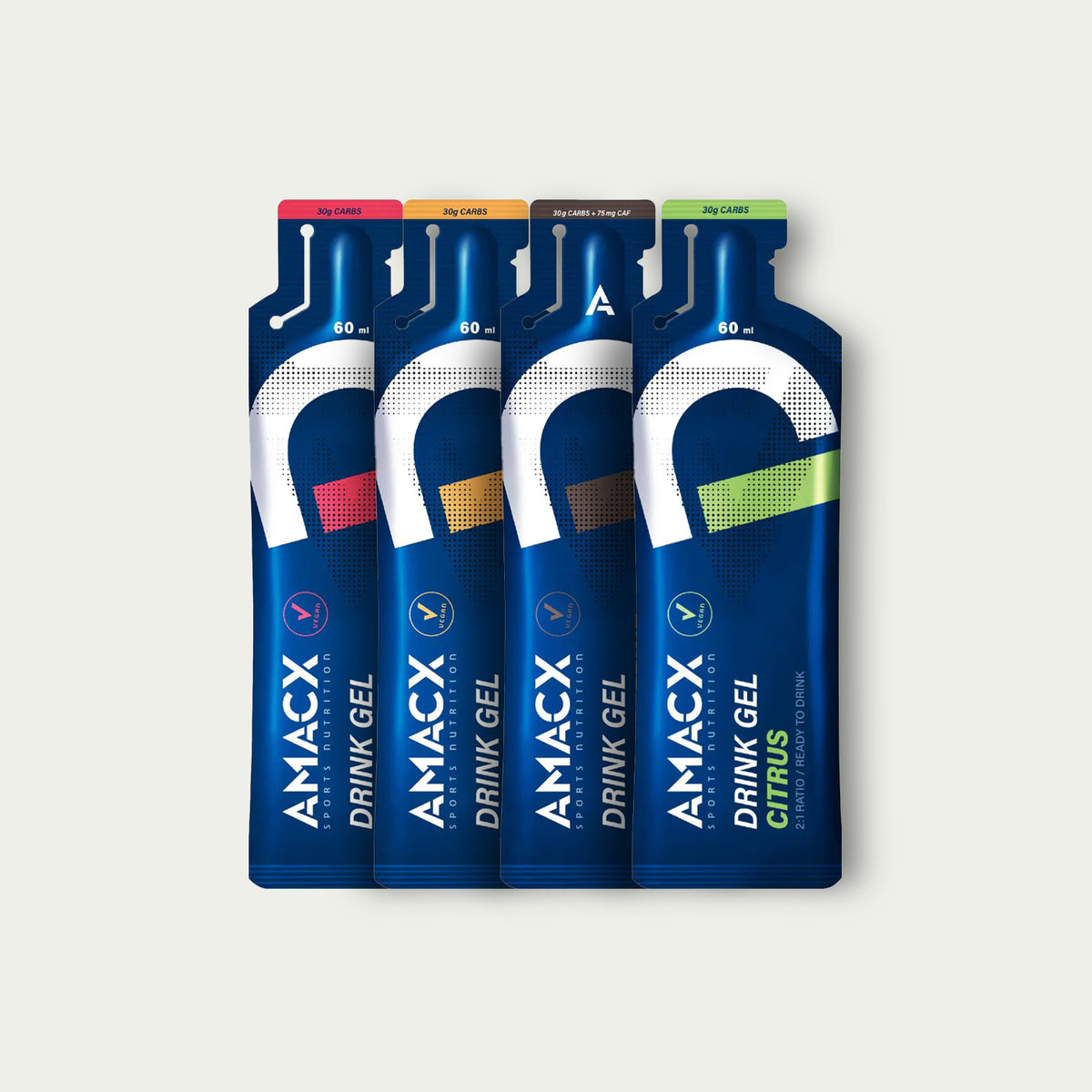
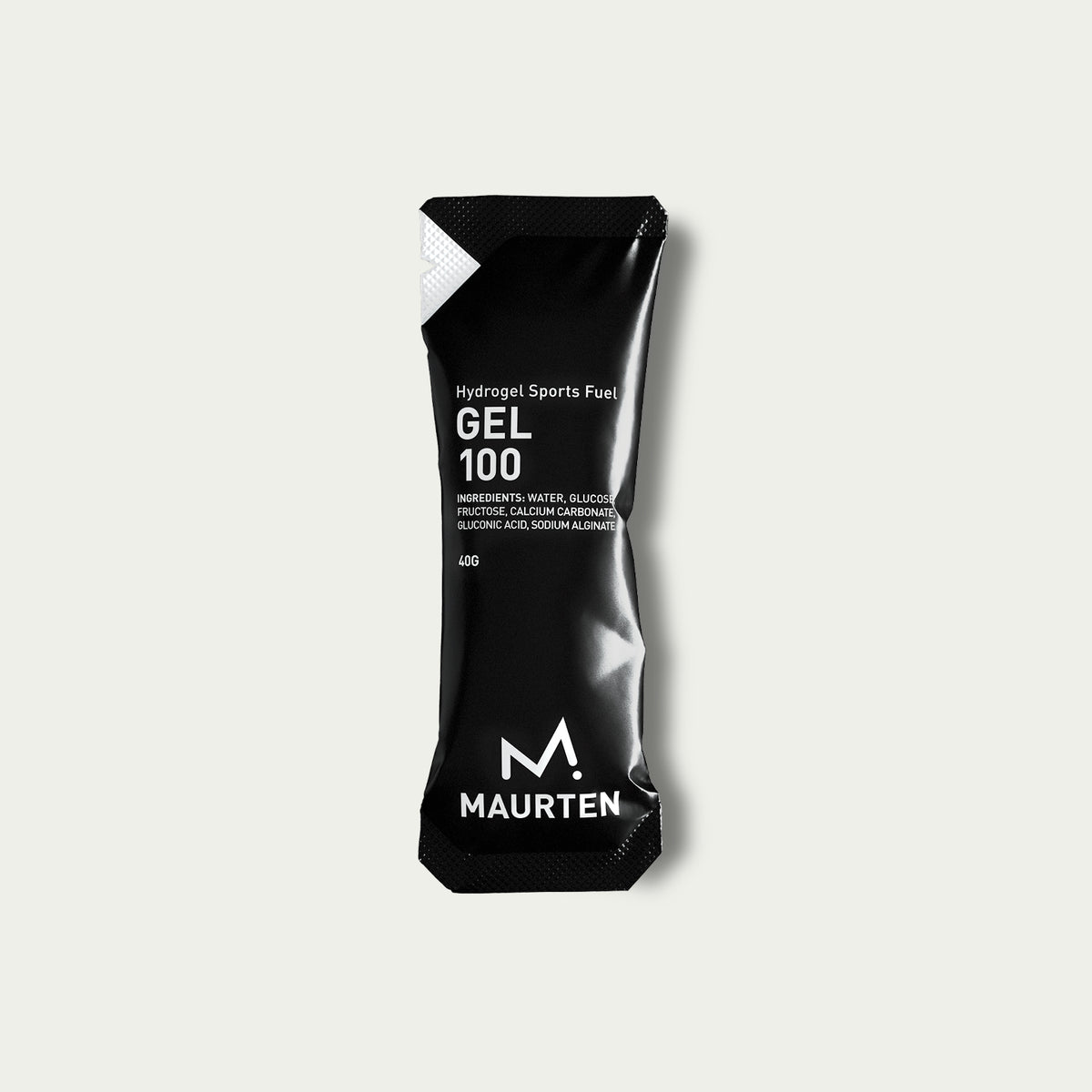
Energy bars are solid fuel for on the go: chewable carbs that fill your stomach and feed your muscles. Where gels are all about speed, bars give you a sense of fullness and variety, exactly what you need on long rides, long runs, hikes and training days. Above you'll find all the energy bars in our range, from brands such as Maurten, Amacx and Enervit: from slow-release oat bars for before the start to fast sports bars with 30 grams of carbs for during exercise. Below you'll read which bar suits which moment, how many you need and how to combine bars with gels and sports drink.
Pros
- Solid food keeps you feeling full: no empty, hungry feeling like with just gels and drinks
- Chewable variety breaks up flavour fatigue on long rides and days out
- 22 to 40 grams of carbs per bar: counts fully towards your hourly plan
- A type for every moment: slow-release oat bars beforehand, fast sports bars during
- Plenty of vegan, gluten-free and lactose-free options
- Handy size for your jersey pocket, race belt or backpack
Good to know
- Chewing at a high heart rate is tricky: save bars for easier sections and switch to gels for the finale
- Have a few sips of water with them for easy digestion
- Bars with a chocolate coating can melt on hot days
- Test your bars in training, just like your gels: not every stomach handles solid food during exercise equally well
Types of energy bar: from oats to high-carb
Not every bar does the same job. Oat bars combine slow and fast carbs for a gradual release: the solid base for the start and the first few hours. Fast sports bars are designed for during exercise: lots of carbs, a soft bite and deliberately little fat and fibre, so your stomach processes them easily. There are also compact race bars in a small size, and chewable hybrids that sit somewhere between a bar and a chew.
| Type | Best moment | Key feature |
|---|---|---|
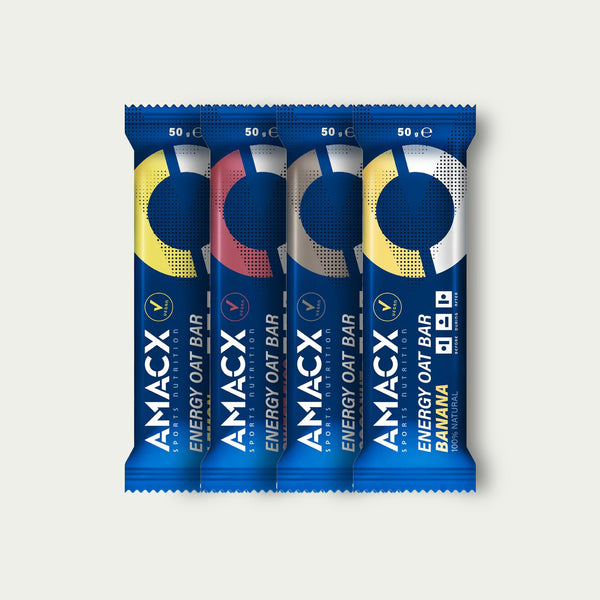
| Oat bar | 60 to 90 min before the start and the first few hours | Slow and fast carbs from oats, very filling. For example the Amacx Energy Oat Bar with magnesium and iron. |
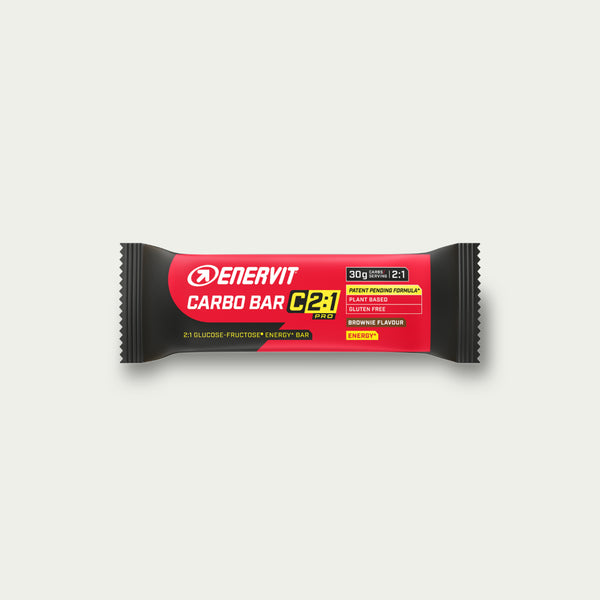
| Fast sports bar | During exercise | 30 to 32 g of fast carbs, soft bite, little fat and fibre. For example the Amacx Fast Bar (40% almonds), the Energy Nougat and the Enervit Carbo Bar C2:1PRO. |
| Compact race bar | Races and intense blocks | Small size and easy to digest. For example the Enervit Competition Bar: 22 g of carbs in a 30 g bar based on rice, oats and fruit. |
| Chew bars and solids | Long rides, for variety | Chewable in-between formats such as the Amacx Turbo Chew Bar (40 g in the 1:0.8 ratio) and the Maurten Solid based on oats and rice. |
Bar, gel or chew: which to choose when?
Bars, gels and chews all deliver carbs and add up in your hourly plan. The difference is in the format, the moment and how they feel in your stomach.
| Feature | Energy bar | Energy gel | Energy chew |
|---|---|---|---|
| Carbs | 22 to 40 g per bar | 20 to 55 g per gel | About 30 g per pack |
| How to take it | Chew, at an easy moment | Straight down, even at a high heart rate | Chew, dose block by block |
| Water with it | A few sips | Only with concentrated gels | A few sips |
| Best moment | Before the start and the first few hours | The whole way, especially the finale | For variety midway |
| Fullness | High: feels like a real meal | Low | Medium |
How bars fit into your hourly carb plan
For long efforts you aim for 60 to 90 grams of carbs per hour. A bar of about 30 grams is a full building block in that plan, alongside your sports drink and gels.
Example for a long ride: a bottle of sports drink (30 g) plus a bar (30 g) makes 60 grams per hour. Want to reach 90 grams? Add a gel. Plan your bars in the first half (when chewing still feels comfortable) and save your gels for the second half and the finale.
Rule of thumb: the longer and easier the effort, the bigger the share of solid food. The shorter and more intense, the more you shift towards gels and drinks. On a 6-hour sportive you can easily eat 3 to 4 bars; in a 2-hour race, often none at all.
Eat your last bar well before the hardest part of your ride or race. Solid food needs more time than a gel: allow 30 to 45 minutes before the energy is fully available.
What's in an energy bar?
The base of every energy bar is carbohydrate, usually from a mix of oats, rice, fruit, glucose syrup and sugars. Good sports bars deliberately keep fat and fibre low, because they slow gastric emptying and leave you feeling heavy during exercise. That's the biggest difference from a regular cereal bar or chocolate bar.
Carb ratios matter in bars too: bars from the 2:1 ranges of Amacx and Enervit slot seamlessly into a plan of up to 90 grams per hour, while a chew bar in the 1:0.8 ratio fits strategies of up to 120 grams. Many bars also contain a modest amount of sodium, and oat bars sometimes add extras such as magnesium and iron. If you have allergies, check the ingredients: nougat bars, for example, often contain almonds and egg, while oat bars and almond bars are often fully vegan.