





Electrolytes
The salts you lose through sweat. Effervescent tablets, capsules and sachets in strengths for light to very salty sweaters.





No products match this filter.
Which format suits you?




Three things to look for
Sodium per litre
Choose the strength that matches your sweat profile.
Sweat loss per hour
Depends on intensity, weather and your body.
Calorie-free
Manage your hydration separately from your energy intake.
White salt marks on your kit or frequent cramp on hot days? Then go for a strength of 1000 to 1500 mg of sodium per litre.
Learn more
Why electrolytes
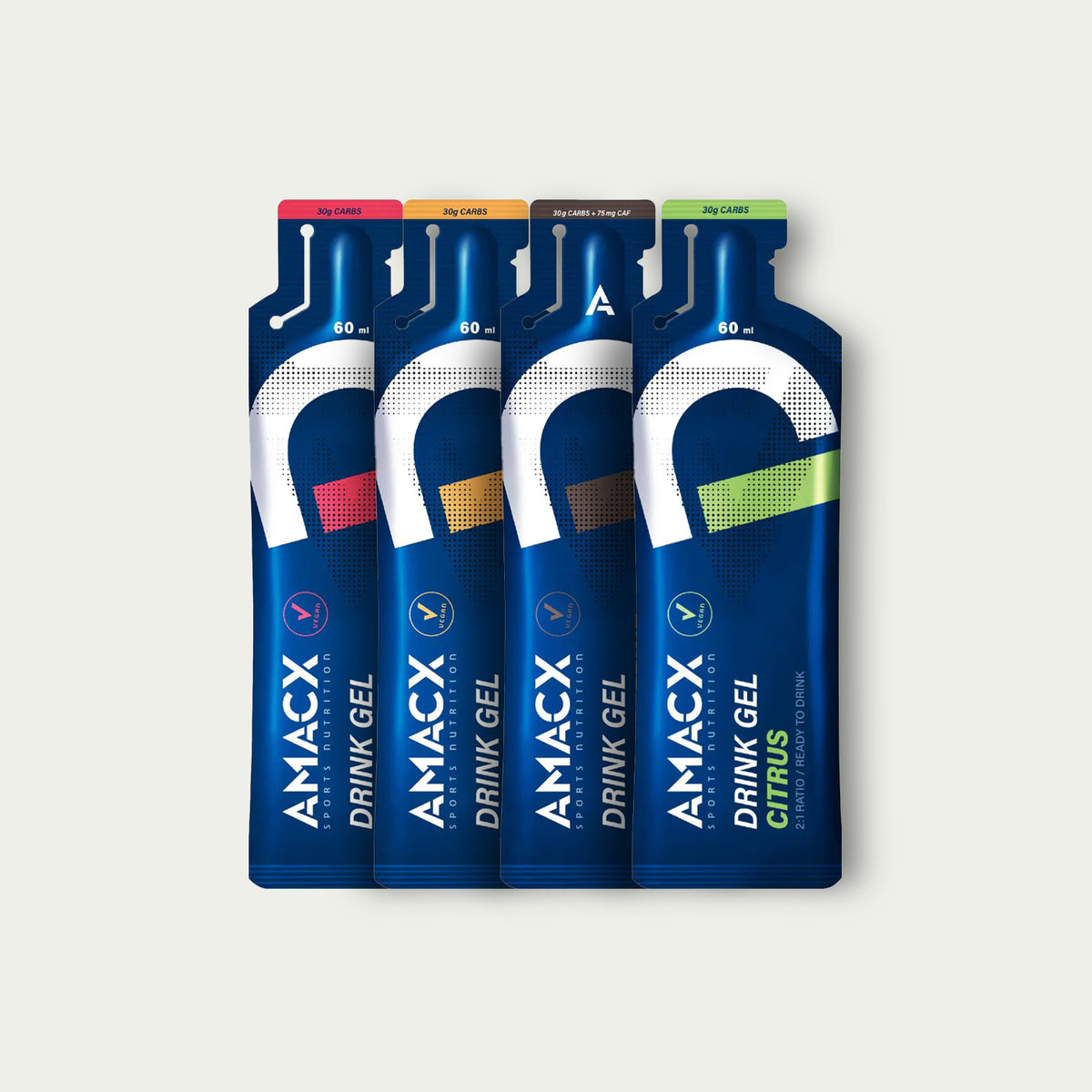
Electrolytes are the minerals you lose through sweat: mainly sodium, along with potassium, magnesium, calcium and chloride. They regulate your fluid balance, your nerve signals and your muscle function. If you train long or in the heat and drink only water, you replace fluid but not salts, which leads to an upset balance, reduced performance and sometimes cramp. Above you'll find all the electrolytes in our range: effervescent tablets, capsules and sachets from Precision Fuel & Hydration, Amacx and Enervit, in strengths for light to very salty sweaters. Below you'll read when you need electrolytes, how much sodium to replace and which format suits you.
Pros
- Replace the sodium you lose through sweat: by far the electrolyte you lose the most of
- Help you actually hold on to the fluid you drink, instead of weeing it straight out again
- Calorie-free options let you manage hydration completely separately from your carb plan
- A format for every preference: effervescent tablets for your bottle, tasteless capsules or sachets on the go
- Different strengths from 500 to 1500 mg of sodium per litre, from light to very salty sweaters
- Every batch independently tested for banned substances
Good to know
- For short, easy sessions under an hour, plain water is enough
- Cramp has several causes: electrolytes help, but training and pacing do the rest
- Drinking lots of water without salts can actually dilute your sodium levels on long, hot days
- Electrolytes provide no energy: on long days, always combine them with carbs
What are electrolytes and what do they do in your body?
Electrolytes are minerals that carry an electrical charge when dissolved in your body fluids. They control how fluid is distributed between your cells, how your nerves pass on signals and how your muscles contract. When you exercise you lose them through sweat, with sodium by far the biggest loss: that's why replacement for sport almost always centres on sodium, with the other minerals in a supporting role.
| Electrolyte | Role in your body | Loss through sweat |
|---|---|---|
| Sodium | Regulates your fluid balance and signal transmission from nerves to muscles | By far the largest: 200 to well over 2000 mg per litre of sweat, varying hugely between individuals |
| Chloride | Works with sodium to maintain fluid balance | Large, linked to sodium |
| Potassium | Regulates fluid balance inside your cells | Limited |
| Magnesium | Contributes to normal muscle and nerve function | Small |
| Calcium | Needed for your muscles to contract | Small |
How much sodium do you need? Know your sweat profile
How much sodium you lose varies enormously from person to person: from around 200 to well over 2000 mg per litre of sweat. That explains why one athlete gets through the whole Ironman bike leg on water while another is cramping after two hot hours. You don't need a lab test to get to know your profile: your body gives clear signals.
| Your profile | Advice |
|---|---|
| Light sweater | Little visible salt loss, rarely any cramp. Start with about 500 mg of sodium per litre of fluid during long or hot sessions. |
| Average sweater | Normal sweat rate, occasional salt marks. About 1000 mg per litre is the best starting point for most endurance athletes. |
| Salty or heavy sweater | White marks on your kit, stinging eyes, a history of cramp. Choose 1500 mg per litre and top up with salt capsules on extreme days. |
Weigh yourself before and after a long session: every kilo lost equals about a litre of sweat. Within a few weeks you'll know exactly how much you drink and lose in different conditions.
Effervescent tablet, capsule or sachet: which format should you choose?
All formats deliver the same thing: sodium and supporting minerals. The difference is in ease of use and how they fit with the rest of your nutrition plan.
| Format | How it works | Ideal for |
|---|---|---|
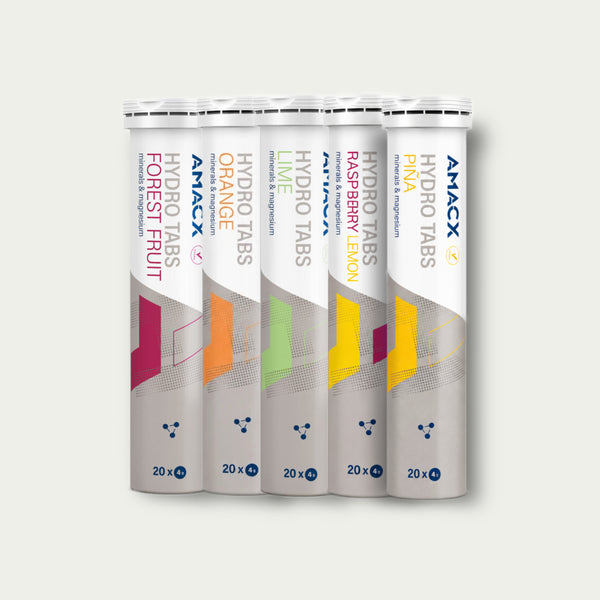
| Effervescent tablet | Dissolve one tablet in your bottle, usually calorie-free and lightly flavoured. For example the Precision PH tablets (500, 1000 or 1500 mg per litre) and the Amacx Hydro Tabs. | Everyday use: the standard for bottles in training and racing |
| Capsule | Tasteless salt capsules you take with a sip of water, such as the Precision Electrolyte Capsules. Independent of what's in your bottle. | Salty sweaters, hot races and anyone who doesn't want flavoured water |
| Sachet or powder | Pre-measured powder sachets for on the go, such as the Enervit Sport Electrolytes with 400 mg of sodium plus magnesium per sachet, sugar-free. | Travel, multi-day trips and refilling bottles on the go |
| Isotonic sports drink | Combines electrolytes with carbs in one bottle. | Anyone who prefers to cover hydration and energy with one product |
Preloading, cramp and the water trap: using electrolytes strategically
Preloading: before a hot or long race, you ideally start with your fluid balance fully topped up. To do that, drink a bottle with a strong electrolyte mix (1000 to 1500 mg of sodium per litre) the evening before and about 90 minutes before the start. The sodium helps your body hold on to that fluid instead of getting rid of it straight away.
Cramp: muscle cramp rarely has a single cause. A lack of sodium plays a role for many athletes, but fatigue, going too hard and not enough training for the race duration weigh at least as heavily. So electrolytes are part of the solution: combine them with realistic pacing and a good build-up.
The water trap: drinking nothing but water on long, hot days can actually dilute your sodium levels. You feel sick, bloated or dizzy even though you're drinking enough. So on long endurance efforts, drink with electrolytes instead of plain water and let your thirst help guide you.